
Written by Sofia
For two weeks every spring, Paris becomes obsessed with one color: that gorgeous brick-red clay that defines Roland Garros. This isn’t just another tennis tournament — it’s pure French sporting culture, a stage for epic drama, and the place where underdogs transform into legends. Here are the wildest stories behind the world’s only clay-court Grand Slam, packed with facts that’ll blow your mind.
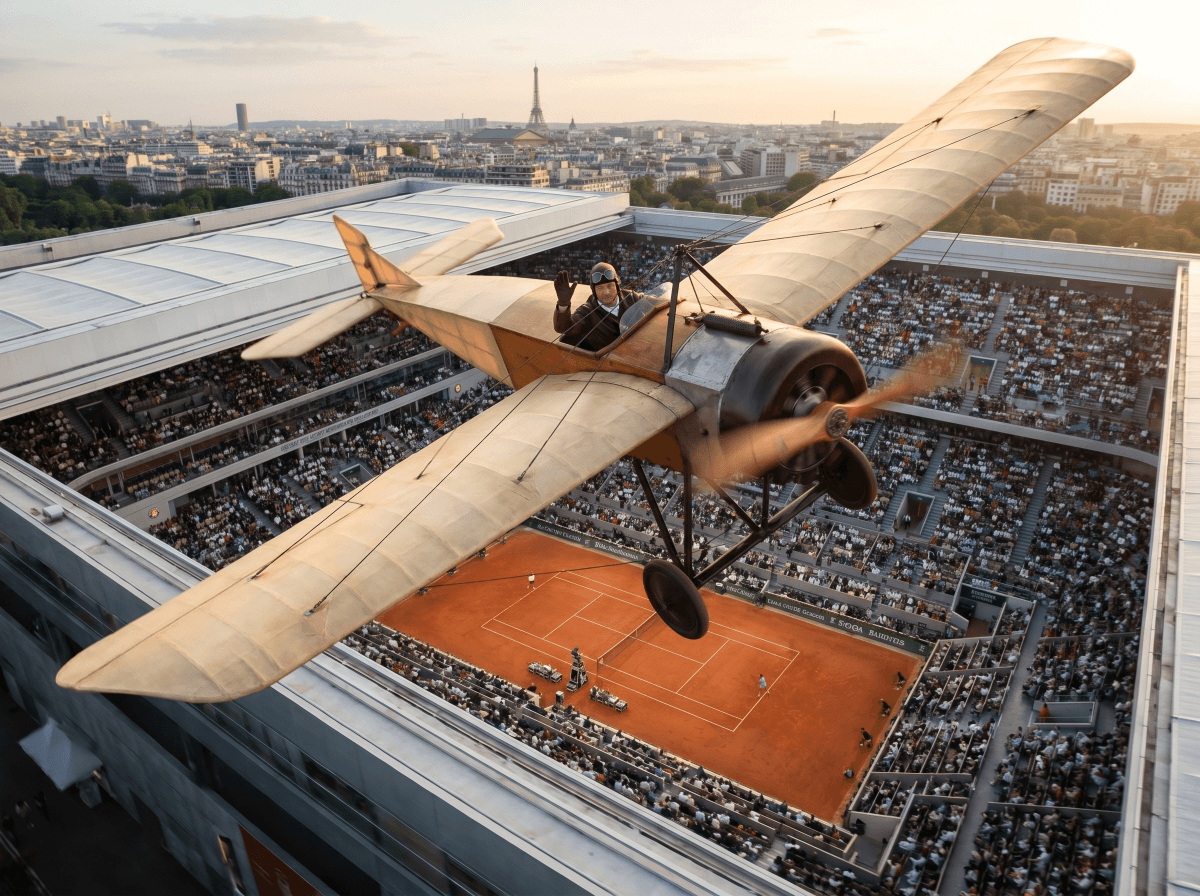
Let’s kick off with the most bizarre story of all: the world’s most famous tennis stadium is named after a guy who probably never hit a topspin forehand in his life. Roland Garros was an aviation pioneer who became the first person to fly across the Mediterranean Sea on September 23, 1913 — eight grueling hours in a wooden plane from France to Tunisia. During World War I, he became one of history’s first fighter pilots before getting shot down in October 1918, just one day before his 30th birthday.
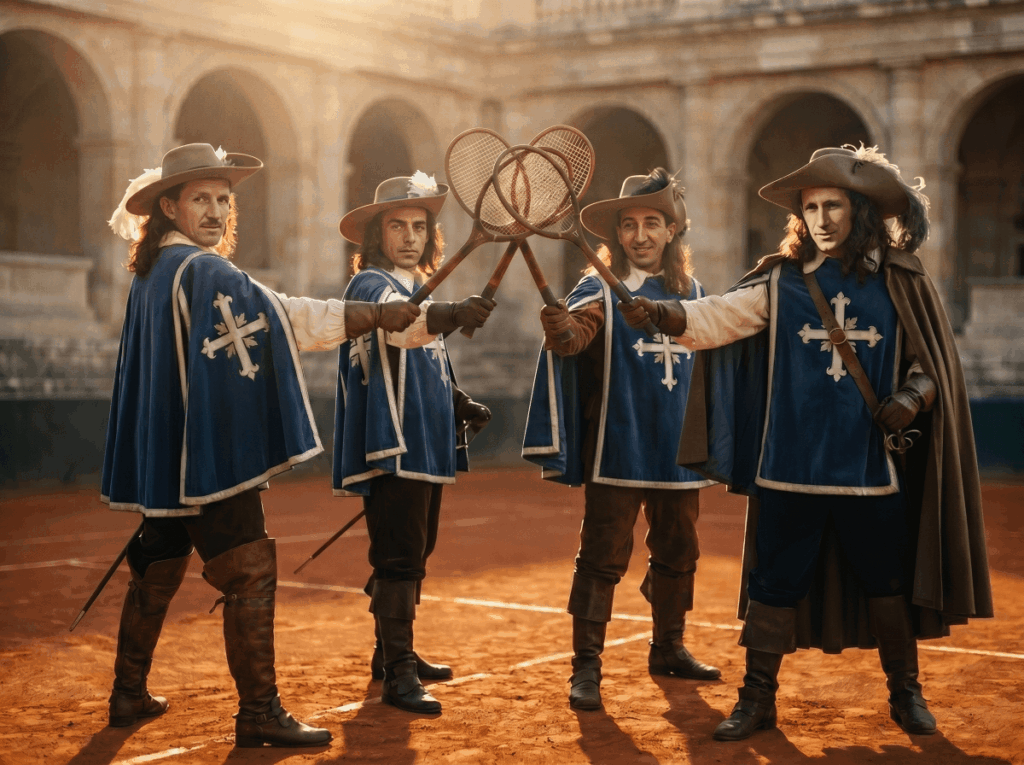
So why name a tennis venue after him? When France’s legendary “Four Musketeers” won the Davis Cup in 1927, they needed a proper home court for the 1928 defense. Stadium builder Émile Lesieur, who’d served alongside Garros in the war, insisted on naming the new complex after his fallen friend. The venue officially opened on May 19, 1928, with a women’s international match.
Three Courts, Three Incredible French Open Stories
Walk around the grounds and you’ll pass three show courts, each with its own fascinating backstory:
Court Philippe Chatrier is the centerpiece: 15,000 seats and a retractable roof added in 2020. It’s named after the former French Tennis Federation president who brought tennis back to the Olympics in 1988 after a 64-year absence.
Court Suzanne Lenglen honors the French woman who became the world’s first global sports icon in the 1920s. “La Divine” — The Divine One — won six French Open titles and double Olympic gold in 1920. That pleated roof added in 2024? It’s a tribute to her legendary tennis skirt designed by Jean Patou.
Court Simonne Mathieu, opened in 2019 inside a botanical garden, carries the name of one of French tennis’s most courageous figures. Mathieu won the French Open in 1938 and 1939, then founded France’s first female military corps at Charles de Gaulle’s request. On Paris Liberation Day, she marched down the Champs-Élysées as a captain alongside de Gaulle himself.
Trophies That Tell Stories
Even the trophies are history books. The men’s Coupe des Mousquetaires honors those four French tennis legends from the 1920s: René Lacoste (yep, the crocodile guy!), Henri Cochet, Jean Borotra, and Jacques Brugnon. Since 1979, the women have lifted the Coupe Suzanne Lenglen — a trophy that seems to gleam with more reverence each year.
French Open Records That’ll Never Be Broken
- Rafael Nadal collected 14 titles between 2005 and 2022, posting an absolutely insane 112-4 record — that’s a 96.5% win rate, the highest any player has achieved at a single Major. The “King of Clay” only lost four times in Paris: to Robin Söderling (2009), Novak Djokovic (2015 + 2021), and Alexander Zverev (2024).
- Steffi Graf needed just 32 minutes to demolish Natalia Zvereva 6-0, 6-0 in the 1988 final — the shortest Grand Slam final in Open Era history. It was part of her legendary Golden Slam year.
- Chris Evert leads the women’s all-time list with 7 titles.
- Longest final ever: 5 hours, 29 minutes — Carlos Alcaraz beat Jannik Sinner in a fifth-set match tiebreak in 2025.
Want to be part of the French Open action instead of just watching?
On closecalltips you can start a private prediction league with friends and predict the entire tournament — match by match. Clay, drama, predictions.
Or join our public tournament challenge, compete against tennis fans worldwide and win a Head Radical MP Palm Crew Edition racket.
Invitation Code: PARISJETAIME
The Loudest Fans in Tennis
Anyone who confuses Roland Garros with Wimbledon’s polite silence clearly hasn’t experienced Paris. French Open crowds are notorious for being the loudest and most passionate in tennis — pros regularly compare the atmosphere to a soccer match. Court 14 even has its own nickname: “Le Chaudron” (The Cauldron). Play a Frenchman there and you’ll get the Marseillaise sung between serves.
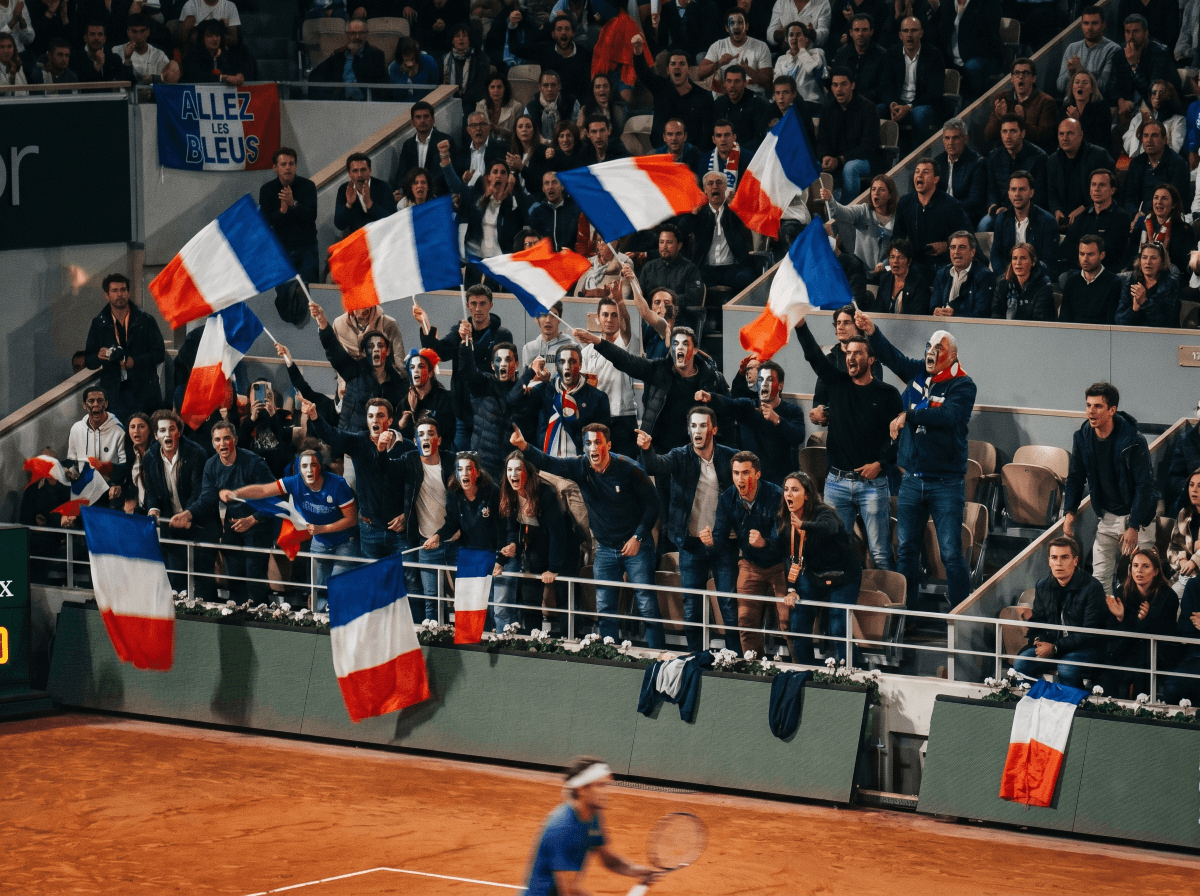
Sometimes it goes too far: in 2024, organizers banned alcohol from the stands after rowdy outbursts. Belgian pro David Goffin even reported getting spat on with chewing gum by a fan. Even Novak Djokovic, who’s hardly noise-sensitive, admits: “The people here are louder and more passionate than at any other Grand Slam.”
There’s method to the madness. Since Yannick Noah’s triumph in 1983, no Frenchman has won in Paris. Since Mary Pierce in 2000, no Frenchwoman either. The longing is massive — and Parisians express it loudly.
Three Wild French Open Facts
- Internment camp 1939-40: Between fall 1939 and May 1940, the French government used Roland Garros as an internment camp for “undesirable foreigners” — including writer Arthur Koestler.
- Lacoste since 1933: The partnership with the fashion brand founded by Musketeer René Lacoste has lasted over 90 years. The crocodile still outfits all umpires and ball kids today.
- Equal pay only since 2006: Roland Garros was the last of the four Grand Slams to offer equal prize money to men and women.
Bottom Line: Where Tennis Becomes Parisian Opera
Roland Garros combines history, physical demands, and French passion like no other tournament. The red clay forces longer rallies, the loud crowds turn every match into mini-drama — and that’s exactly what makes following the French Open so irresistible.
Ready to make Roland Garros 2026 your stage? On closecalltips you can start a private prediction league in seconds, get your friends involved, and predict the entire tournament. After two weeks in Paris, there won’t just be a champion on court — but also one in your crew. Join now at closecalltips.com.
Ready to test your tennis knowledge?
Join closecalltips and predict match outcomes against fellow tennis fans.
Join Now — It’s Free