Written by Sofia · 28.08.2026 · 5 min read
Blazing floodlights, screaming fans, a brilliant blue hard court, and cocktails garnished with melon balls — the US Open is the loudest, most electric, most unapologetically extra of all four Grand Slams. Where Wimbledon demands hushed reverence, New York cranks everything up to eleven. But behind all that spectacle sits a US Open history stretching back more than 140 years — one that started, of all things, with a horse on a very fancy porch. Here are the wildest facts about the last Major of the year.
Legend has it the whole thing began with a rich-guy dare. In 1879, newspaper magnate James Gordon Bennett Jr. apparently put his friend — polo player Captain Henry “Sugar” Candy — up to riding a horse directly onto the veranda of the ultra-exclusive Newport Reading Room gentlemen’s club. Candy actually did it, trotted right into the club’s rooms, and got himself promptly kicked out for life.
Bennett, being obscenely wealthy and apparently petty enough to match, responded by founding his own club: the Newport Casino. (And no, there was no gambling — back then “casino” simply meant an upscale social club, not a slot machine hall.) That’s exactly where, on August 31, 1881, the first US Championships teed off: 25 gentlemen competed, a string quartet played in the background, and one Dick Sears won — then won six more times in a row. Classic.
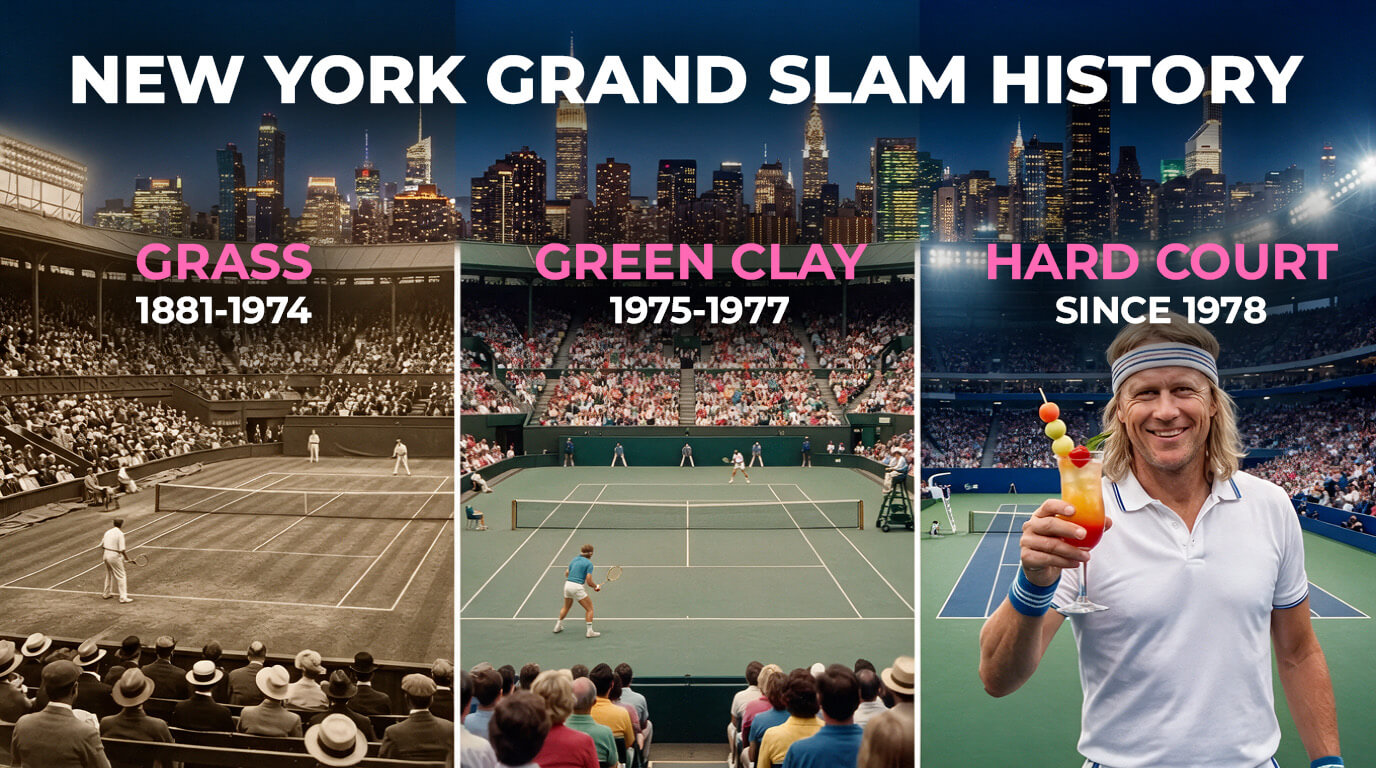
From that Newport society gathering, a world Major was born. The tournament moved closer to New York in 1915 (Forest Hills), then landed in Flushing Meadows in 1978, where it’s been ever since. The “US Open” name arrived in 1968, when professionals were finally allowed to compete. And here’s something no other Major can claim: the US Open has been played on all three surfaces — grass (until 1974), clay (1975–1977), and hard court ever since.
Honey Deuce, Night Sessions, and the Loudest Stage in Tennis
Some US Open traditions are loud. Others you can taste. Back in 1975, the tournament became the first Grand Slam to introduce night sessions under floodlights — and those electric evening matches in a packed stadium have been a core part of the brand ever since. Then there’s the unofficial signature drink: the Honey Deuce, a cocktail of vodka, lemonade, and raspberry liqueur, topped with three honeydew melon balls skewered on a stick to look like tiny tennis balls. It’s been a cult favourite since 2007, and hundreds of thousands of them get sold every single year. Mix that with pure New York energy and you’ve got the loudest atmosphere in the sport, full stop.
And the crowd itself? Forget it. No other sporting event pulls in quite the celebrity roster that the US Open does. Vogue editor Anna Wintour has been courtside for decades. Ben Stiller showed up in 2025 with Owen Wilson. Fashion designer Vera Wang is a regular. Lin-Manuel Miranda — the guy who created Hamilton — is basically a fixture. Every year, a rotating cast of A-listers from Hollywood, music, and sport descends on Flushing Meadows. In New York, the tournament isn’t just tennis. It’s the place to be seen.
More Than Tennis: Billie Jean King and Arthur Ashe
US Open history isn’t just about what happened on the court. In 1973, the tournament became the first Grand Slam to offer equal prize money to men and women — a landmark moment that Billie Jean King had literally threatened to boycott the event over (some other Majors didn’t follow until as late as 2007). In recognition of everything she fought for, the complex was renamed in her honour in 2006: the USTA Billie Jean King National Tennis Center.
The tournament’s biggest stadium carries the name of another icon: Arthur Ashe. He won the very first US Open in 1968 — the first, and to this day only, Black man to win the men’s singles title. Here’s the wild part: Ashe was still an amateur at the time (he was serving in the US Army), which meant he wasn’t allowed to accept the $14,000 prize money. It went to runner-up Tom Okker instead, while Ashe went home with a $20 daily allowance. But Ashe’s legacy grew far beyond tennis — he campaigned against apartheid in South Africa, championed civil rights, and after contracting HIV through a blood transfusion, dedicated himself to AIDS awareness until his death in 1993.
Records That Stand the Test of Time
- Jimmy Connors is the only player to win the US Open on all three surfaces — grass, clay, and hard court.
- In the Open Era, Connors, Pete Sampras, and Roger Federer share the men’s record with five titles each. Federer’s five came consecutively from 2004 to 2008. In the amateur era, Richard Sears, William Larned, and Bill Tilden each won seven.
- On the women’s side, Serena Williams and Chris Evert are tied at six titles apiece — but Molla Mallory holds the all-time record at any Grand Slam with eight titles between 1915 and 1926.
And then there are the marathon matches. The longest in US Open history went down in 2024, when Daniel Evans and Karen Khachanov battled for a staggering 5 hours and 35 minutes — in the first round. That finally knocked off a record that had stood for 32 years: the legendary 1992 semifinal where Stefan Edberg outlasted a young Michael Chang in 5 hours and 26 minutes.
Want to actually be in the New York Grand Slam action instead of just watching?
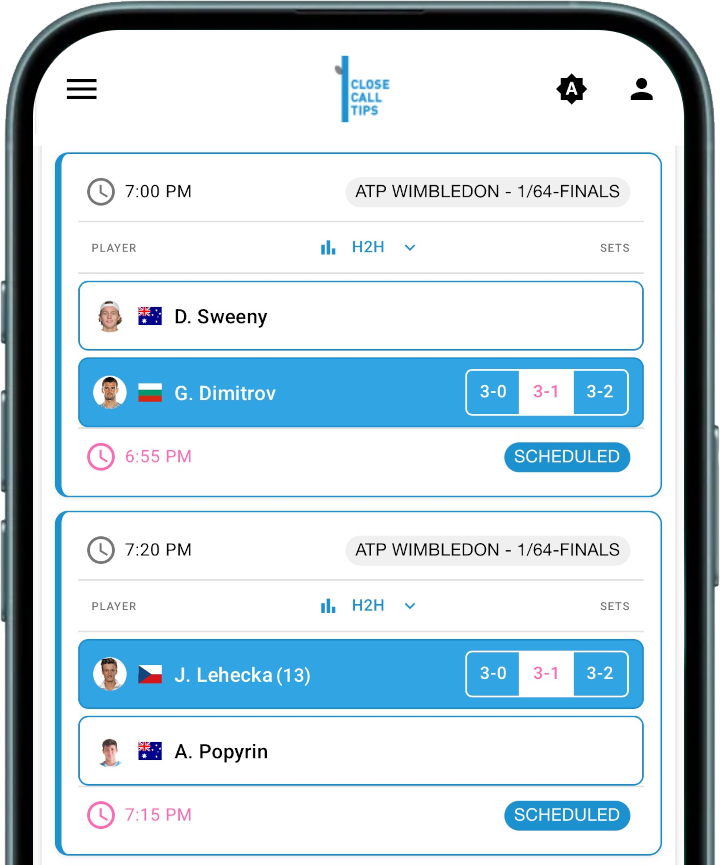
On closecalltips you can start a private prediction game with friends and pick the results match by match through the whole tournament. Time to prove you know your tennis.
Or jump into our public prediction game and win some great prizes.
Prizes for the New York Grand Slam Prediction Game
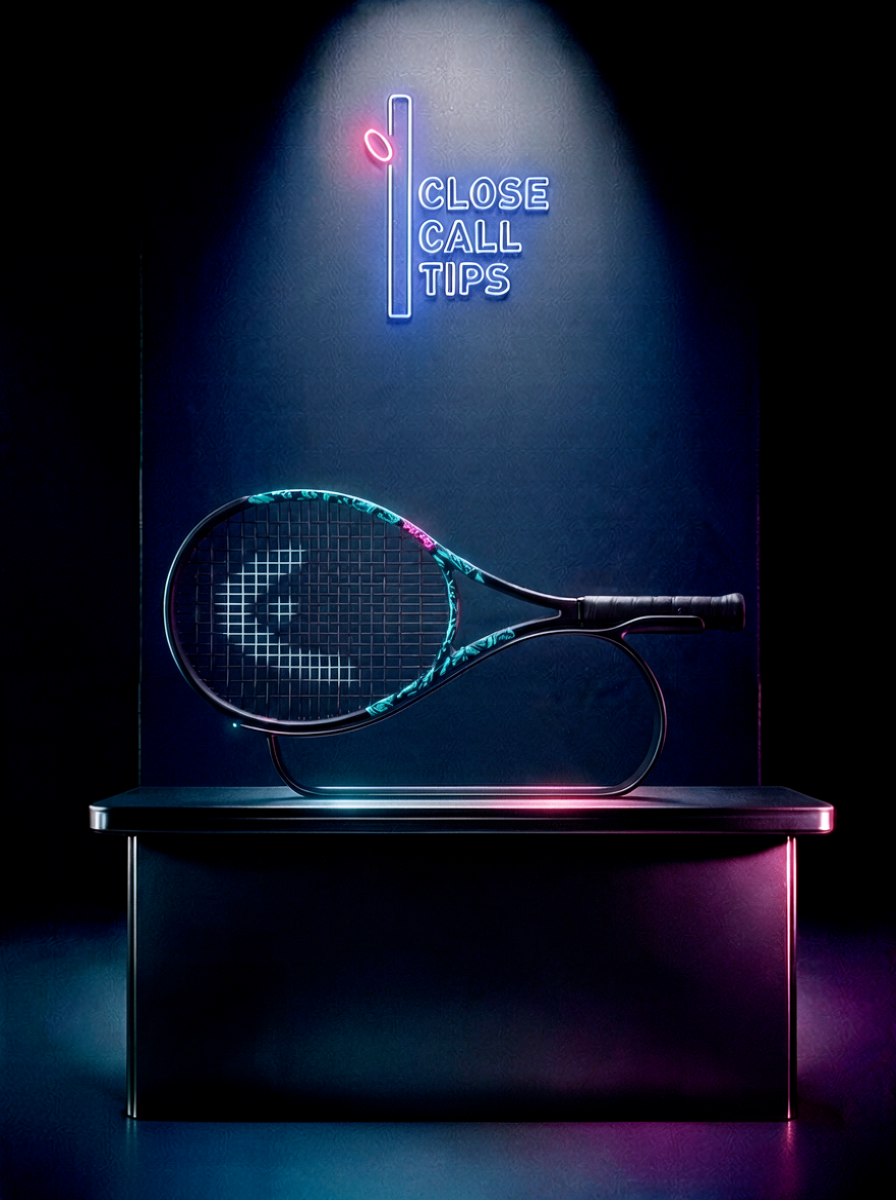
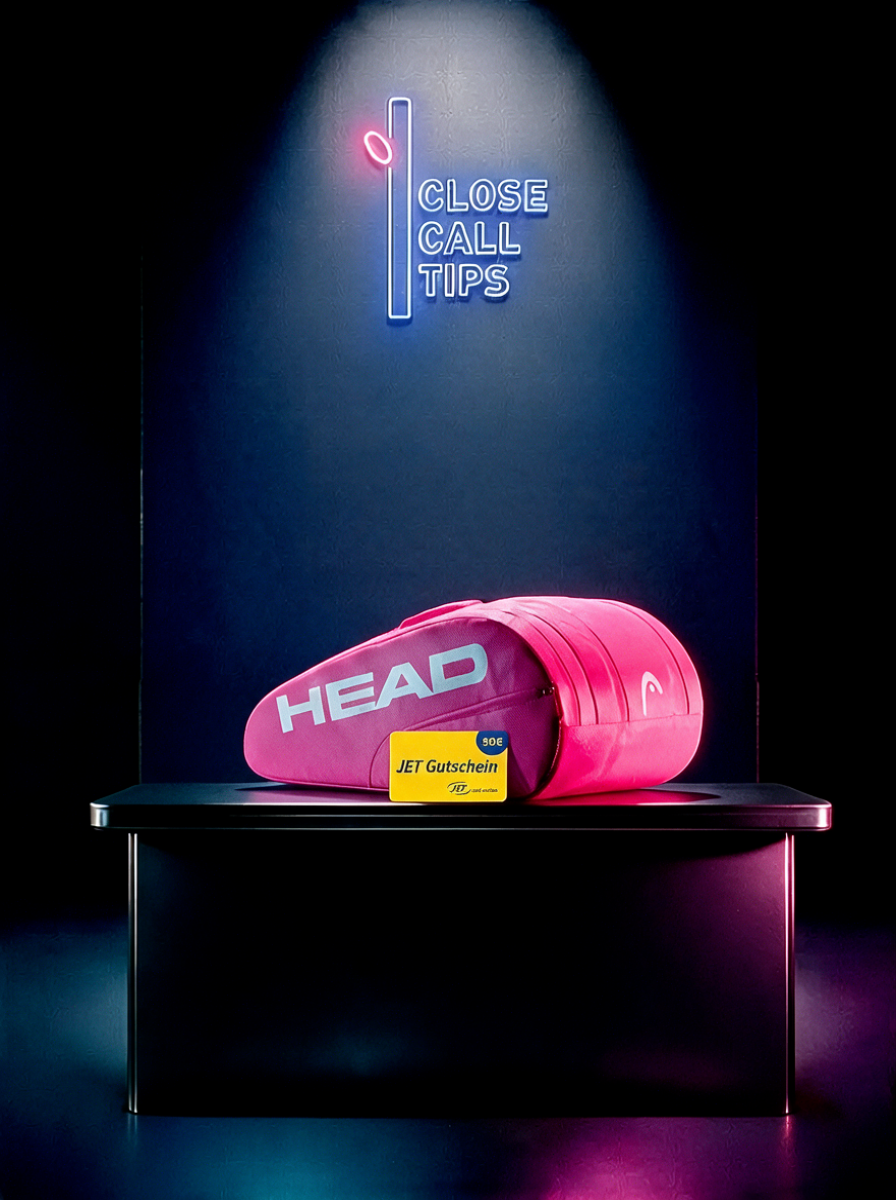
HEAD Base Schlägertasche 9er – pink + €50 JET Tankgutschein
presented by JET Tankstelle Rosenthaler Str. 102, 9020 Klagenfurt
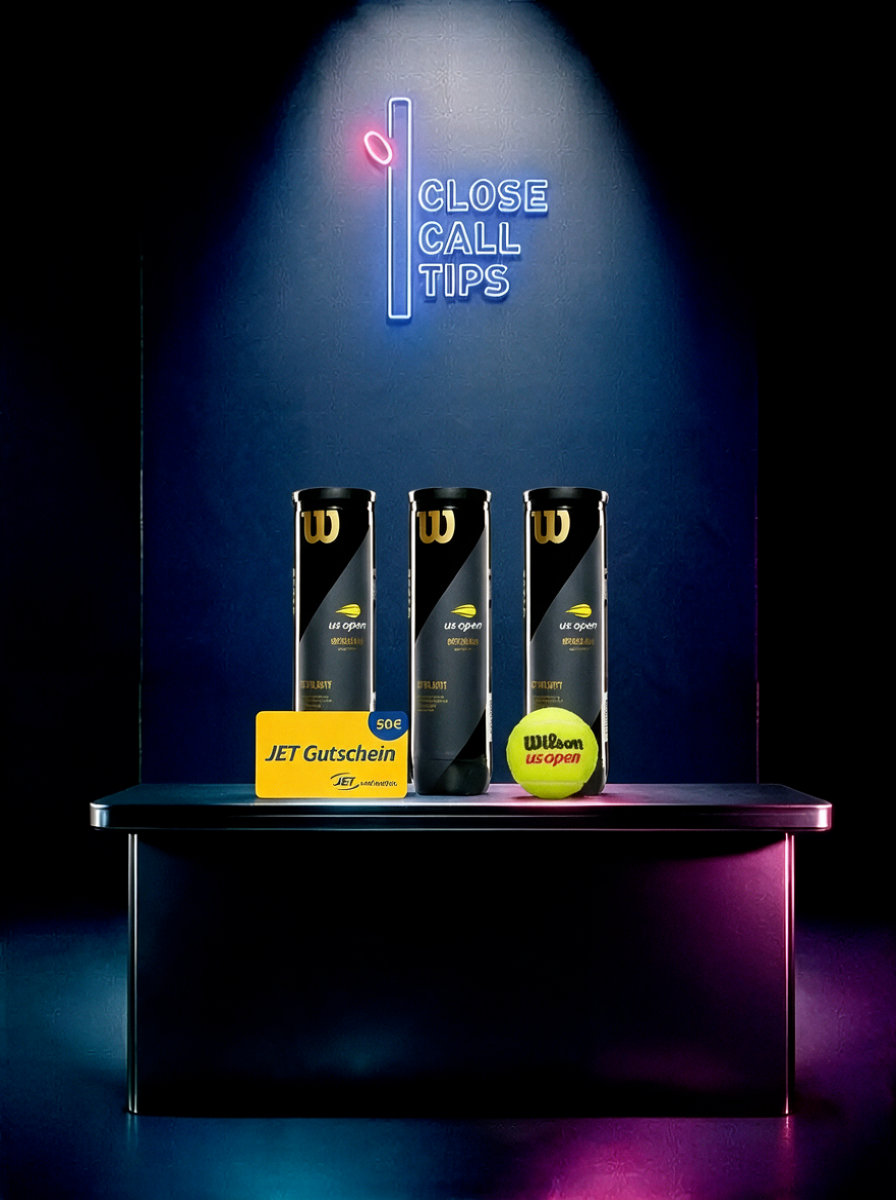
3x – Wilson US Open Tennisbälle – 4er Dose
presented by JET Tankstelle Rosenthaler Str. 102, 9020 Klagenfurt
From Grass to the Blue Hard Court
US Open history is also a story of surfaces — and what that says about how the sport itself has evolved. In the early days, the tournament was played on grass, true to the Lawn Tennis tradition it came from. Fast, unpredictable, and heavily favouring aggressive play.
Then in 1975 came the first big shake-up: the US Open ditched grass for a green clay surface called Har-Tru. Slower, with longer rallies, it gave the tournament a completely different personality for a few years. But that phase didn’t last long either.
By 1978, with the move to Flushing Meadows, the hard court era began — and it’s never looked back. Hard courts blended the best of both worlds: faster and more direct than clay, but more consistent and predictable than grass. The US Open had found its identity. Dynamic, powerful, built for the pace of New York City.
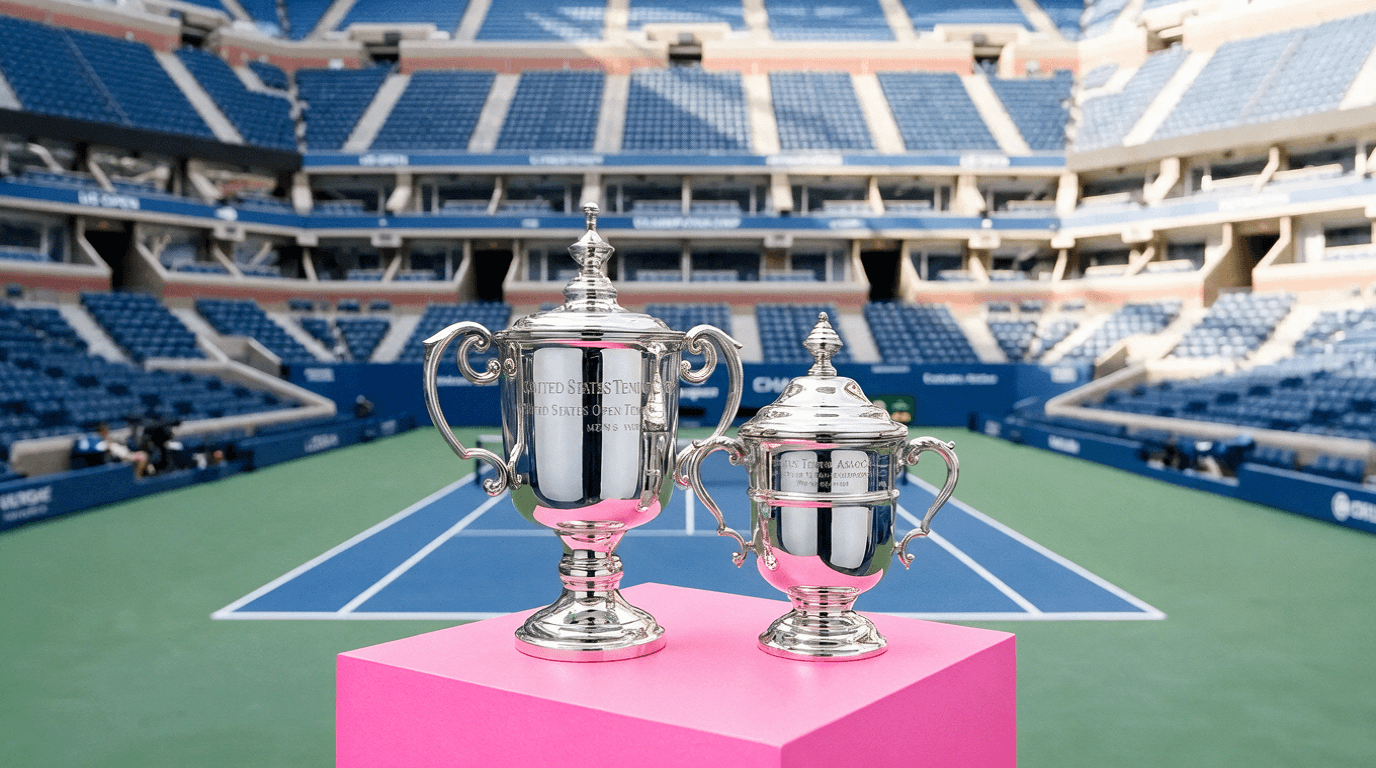
As loud as the atmosphere is, the tech has kept up. Since 2005, the tournament has been played on the iconic “US Open Blue” — blue inside the lines, green outside. The contrast makes the yellow ball dramatically easier to track for cameras and fans alike, and it gives the whole event its unmistakable look.
Towering over it all is Arthur Ashe Stadium: at nearly 23,800 seats, it’s the largest tennis stadium on the planet. A retractable roof added in 2016 keeps rain from derailing play, making the schedule far more reliable. And on the tech front, the US Open was a pioneer here too — in 2006, players were allowed to challenge calls using Hawk-Eye for the first time at a Grand Slam. What felt revolutionary back then is now completely standard, and today electronic line-calling handles decisions automatically.
Three Curious Facts to Take Away
- A “casino” with zero gambling: the tournament’s birthplace, the Newport Casino, was never a gaming hall — “casino” comes from the Italian “casina” (little house) and simply meant a social gathering spot.
- Jets on approach: Flushing Meadows sits directly under the flight path of LaGuardia Airport. Roaring planes overhead are basically part of the US Open soundtrack, and players regularly pause mid-point to wait for the noise to pass.
- Never cancelled: the US Open is the only Grand Slam to have been held every single year since its founding — straight through both World Wars without missing a beat.
Where the US Open Is at Its Loudest
No other Major packs this much energy, US Open history, and pure spectacle into one event. The blue hard court produces fast, unforgiving tennis. The New York nights deliver a crowd atmosphere that genuinely gives you chills. That combination of deep tradition and absolute chaos is exactly what makes this tournament so addictive to follow. When late August rolls around and the last Grand Slam of the year kicks off, one thing’s guaranteed: it’s going to be loud.